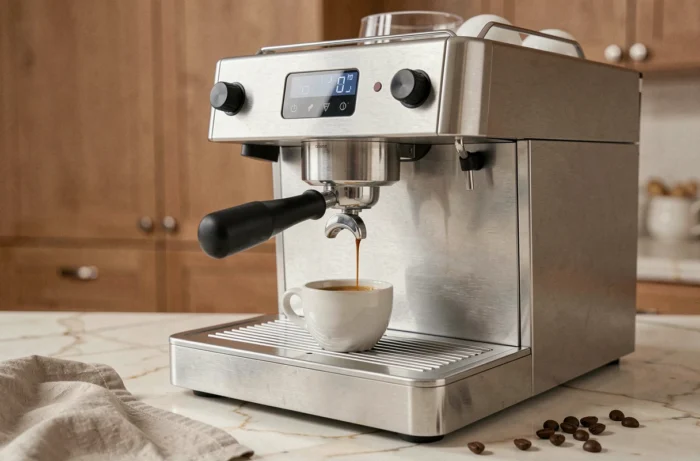
A successful espresso at home relies less on the brand of the machine and more on three technical parameters: pump pressure, thermal stability, and grind fineness. Choosing the best coffee machine for a perfect espresso at home requires understanding how these elements interact, and why some types of devices master them better than others.
Pressure and temperature: what really makes an espresso
Have you ever noticed that two machines displaying the same nominal pressure produce very different coffees? The pressure advertised by the manufacturer (often around fifteen bars) corresponds to the maximum capacity of the pump, not the actual pressure in the portafilter at the time of extraction.
What matters is the effective pressure at contact with the ground coffee, generally around nine bars for a balanced espresso. A vibrating pump, found in most entry-level and mid-range machines, easily reaches this threshold. Rotary pumps, which are quieter, provide more stable pressure over time.
The water temperature plays an equally crucial role. A difference of a few degrees alters the cup profile: too hot, the coffee becomes bitter; not hot enough, it will be acidic and flat. Machines equipped with a thermoblock heat up quickly but can fluctuate. A single or double boiler offers better thermal consistency, which is noticeable from the first sip.
Specialized resources like espresshome.com allow you to compare these technical characteristics among different models, including temperature stability during extraction.
Bean, capsule, or portafilter machine: which type for which espresso
The type of machine determines your leeway on the result in the cup. Here’s what each category concretely offers.
Capsule machine: consistency without effort
The capsule contains a pre-calibrated dose, ground and tamped at the factory. The result is reproducible from one cup to another. However, you cannot adjust the grind, dosage, or temperature. The capsule sacrifices control for simplicity.
The cost per cup remains the highest in the long run, and the issue of waste generated by aluminum or plastic capsules weighs in the decision.
Espresso machine with portafilter
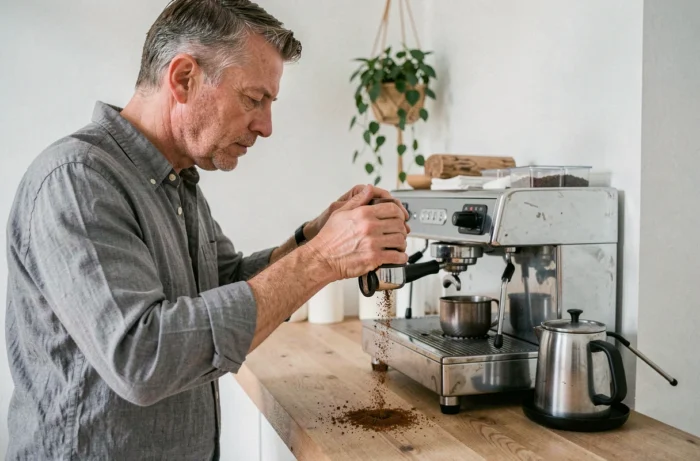
This category offers the most control. You choose the bean, the grind fineness (with a separate grinder), the tamping, and the extraction time. This level of precision requires learning, but it’s also what allows you to achieve a truly personalized espresso.
The portafilter is suitable for enthusiasts willing to dedicate a few minutes to each preparation. A good grinder is as important as the machine itself: without fresh and uniform grind, even a high-end device produces an average result.
Bean machine with integrated grinder
The integrated grinder grinds the beans on demand. Some models also automate tamping and dosing. It’s a compromise between bean freshness and ease of daily use.
The quality of the grinder varies greatly depending on the range. Entry-level steel grinders heat the beans, which alters the aromas. Ceramic conical grinders preserve the taste better and operate more quietly.
Repairability and durability: a concrete criterion for choosing your coffee machine
Since 2024-2025, European regulations have strengthened requirements regarding the durability and repairability of devices. The ESPR regulation (Ecodesign for Sustainable Products Regulation) expands eco-design beyond just energy performance, incorporating the availability of spare parts, ease of disassembly, and the future digital product passport.
Coffee machines are not yet among the first product families targeted. This does not mean that the subject is secondary for the buyer. In practice, a machine with a removable extraction group is easier to clean and descale. A replaceable pump doubles the lifespan of the device.
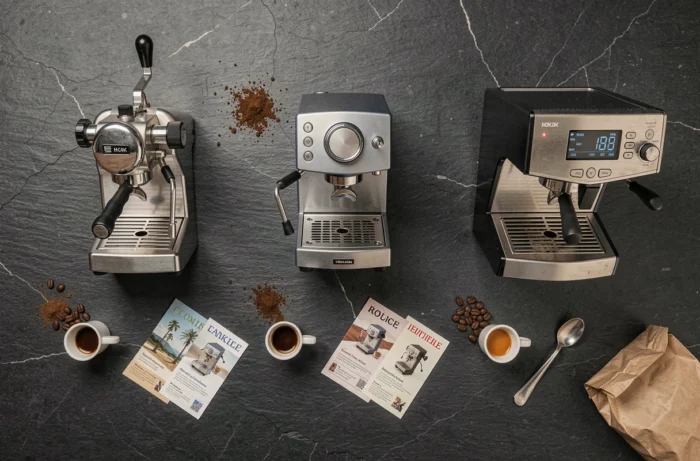
Before purchasing, checking the availability of the group seal, pump, and portafilter for the desired model gives a reliable idea of its longevity.
- A removable extraction group simplifies weekly cleaning and reduces clogging.
- The availability of spare parts (pump, seals, showerhead) for several years after purchase is a more reliable indicator of durability than the initial price.
- Regular descaling, every one to two months depending on water hardness, prolongs the lifespan of the boiler and maintains cup quality.
Concrete selection criteria for a successful daily espresso
Rather than comparing dozens of technical sheets, focus on the points that really change the coffee in your cup.
- Fresh grind takes precedence over everything else: a dedicated grinder or a good integrated grinder transforms the result more than a machine upgrade.
- The water tank capacity should match your consumption. A tank that is too small requires refilling several times a day, which quickly becomes tedious.
- Heating time varies from a few seconds (thermoblock) to several minutes (boiler). If your morning coffee needs to be ready in thirty seconds, this parameter is non-negotiable.
- The steam wand, if you prepare milk-based drinks (cappuccino, latte), should produce fine foam and not coarse froth. Panarello wands make the action easier but limit texture. A classic steam wand offers better control of microfoam.
Choosing a coffee machine for home espresso often comes down to a trade-off between control and convenience. A capsule machine delivers a decent result without learning. A portafilter paired with a quality grinder opens up a whole new range of flavors, provided you dedicate time to it. The best machine is the one whose potential you will actually use every morning.