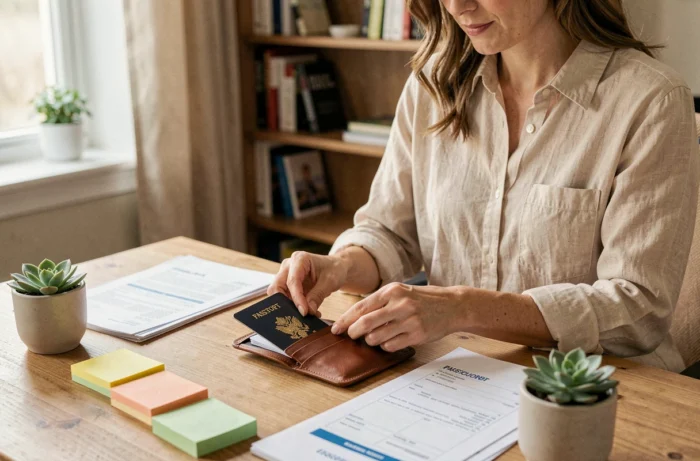
A biometric passport with a detached identity page or a non-responsive chip will be refused at border control, even if the information remains legible to the naked eye. Protecting this document is not just about sliding it into a drawer or a case: it is a matter of storage conditions, handling, and choosing materials suitable for the real constraints of the field.
Passport Deterioration: Mechanisms That Cases Alone Cannot Prevent
The RFID chip embedded in French biometric passports is sensitive to repeated mechanical stress. Continuous pressure (a stack of books, the bottom of an overloaded hard suitcase) can cause delamination of the polycarbonate page. A soft case absorbs occasional shocks but does not protect against prolonged static compression.
Moisture remains the main enemy, far ahead of RFID data theft. Exposure to high humidity levels (bathroom, vehicle parked in direct sunlight, poorly ventilated waterproof pouch) can warp the pages, degrade the cover adhesive, and render the chip unreadable. We recommend storing the passport flat, in a space where temperature and humidity remain stable.
Home storage deserves as much attention as protection while traveling. An attic, garage, or furniture near a heat source (radiator, oven) exposes the document to thermal cycles that accelerate the aging of polycarbonate. A desk drawer in a living room, away from direct light, is sufficient in most cases.
To explore home storage solutions and compare options for travel security pouches and Amazon passport cases, it is worth assessing moisture resistance before RFID shielding.
Passport Storage at Home: Long-Term Storage Criteria
The French passport has a long validity period for adults. Over this time, a poorly stored document accumulates invisible micro-damage that eventually poses problems at control.
Location and Support
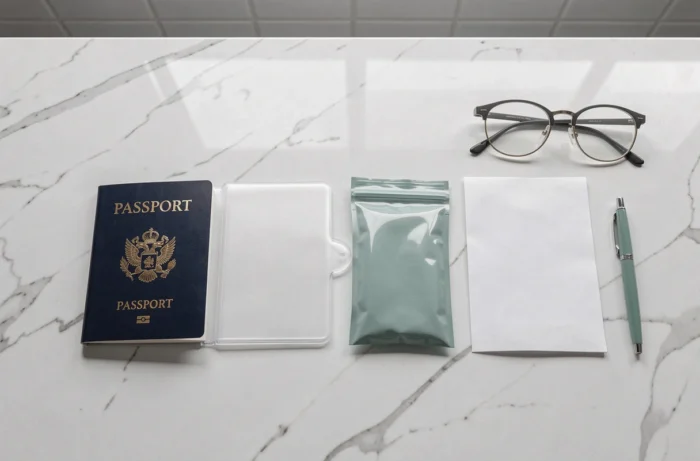
The passport should always be stored flat, never folded or wedged vertically. A binder with acid-free plastic sleeves, like those used in archiving, protects against dust and friction without compressing the document. We discourage using airtight zippered pouches that trap residual moisture.
- Avoid humid rooms (bathroom, laundry room, basement) and areas subject to significant temperature fluctuations (attic, vehicle).
- Do not stack heavy objects on the passport, even in a hard case: static pressure deforms the cover and stresses the chip.
- Keep the passport separate from other metallic documents (keys, paperclips) that can scratch the cover or mechanically interfere with the biometric page.
Copies and Backups
Keeping a digital copy of the identity double page in a secure space (password manager, encrypted cloud) speeds up consular procedures in case of loss abroad. A copy never replaces the original document, but it allows for quick identification by the consulate.
We also recommend keeping a paper photocopy physically separate from the passport, in another bag or with a trusted person.
Passport Protection While Traveling: Prioritizing Real Risks
Unauthorized RFID reading draws the attention of accessory manufacturers. In practice, this risk remains marginal: the effective reading distance of a passport chip is very short, and biometric data is protected by an encryption protocol. Physical theft, loss, and liquid damage are the three priority threats while traveling.
Choosing the Location on Yourself and in Luggage
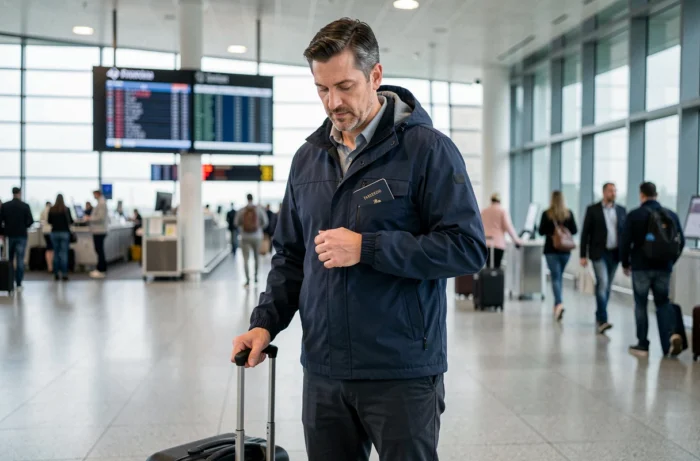
During air transit, the passport should remain on your person (inner jacket pocket, neck pouch worn under clothing) until boarding. Storing it in the overhead cabin luggage during the flight is acceptable, but leaving it in an outer pocket of a backpack creates easy access for a third party.
At the hotel, the room safe is the best compromise. If the room does not have one, keeping the passport in a locked bag at the back of a wardrobe is preferable to leaving it on a nightstand.
- On excursions: take only a copy and leave the original in the hotel safe, unless legally required to present the document (some countries require the original passport during police checks).
- In humid environments (beach, hiking in the rain): a waterproof pouch with a roll closure protects against splashes, but the passport should be removed as soon as possible to avoid condensation.
- In ground transport (bus, train): use a belly pouch or zippered inner pocket. Never place the passport in a bag on the floor or on an accessible luggage rack.
Damaged or Lost Passport Abroad: The Procedure to Know
A passport with a detached identity page, torn pages, or a severely deformed cover may be refused by border authorities. The renewal for deterioration follows the same process as a standard application but requires the submission of the damaged document.
In case of loss or theft abroad, the first step is to report to local authorities (police, gendarmerie of the country). The French consulate then issues a laissez-passer or an emergency passport, depending on the circumstances and timelines.
Having your digital copies accessible offline (screenshots, downloaded PDF file) speeds up this process. We observe that travelers with a readable copy of their biometric page obtain their replacement document faster than those without any proof.
The protection of a passport relies less on the choice of a case than on consistent storage habits: flat storage in a dry environment at home, carrying it on your person in a closed pocket while traveling, and having accessible copies in case of unforeseen events. These simple actions, repeated on every trip, help avoid unpleasant surprises at control.