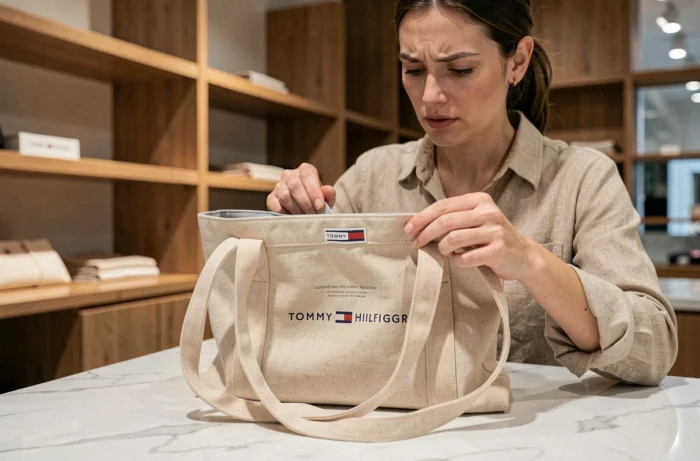
The market for counterfeit Tommy Hilfiger bags remains active, driven by strong demand for the brand and increasingly sophisticated reproduction techniques. The copied logos, imitated stitching, and reproduced labels complicate the task for buyers. The European regulatory framework is evolving, particularly with the Digital Services Act, but the responsibility to verify authenticity still largely falls on the buyer.
Physical indicators to authenticate a Tommy Hilfiger bag
Relying solely on the printed or embroidered logo on the bag is not enough. Recent counterfeits reproduce the typography and colors of the Tommy Hilfiger flag with a precision that can deceive at first glance. Reliable authentication relies on cross-referencing several physical indicators specific to the model and its manufacturing period.
The density and consistency of the stitching serve as a first filter. On an authentic bag, the stitches are tight, uniform, and without loose threads. An irregular stitch or slightly off-color threads compared to the fabric indicate a manufacturing defect incompatible with the brand’s standards.
The weight and finish of the hardware (zippers, buckles, rivets) deserve particular attention. The metals used by Tommy Hilfiger have a notable weight and a smooth finish, without burrs. On a counterfeit, the hardware is often lighter, with a dull appearance or poorly polished edges.
The quality of the interior lining also provides clues. An authentic bag features a neatly sewn lining, without excessive wrinkles or a strong chemical smell. The typography and depth of the interior markings (composition labels, serial numbers) must be clear, aligned, and legible. Blurry lettering or inconsistent spacing between characters should raise alarms.
To avoid counterfeit Tommy Hilfiger bags, cross-referencing these indicators remains the most reliable method, as no isolated criterion guarantees authenticity.
QR code and digital labels: limitations of remote verifications
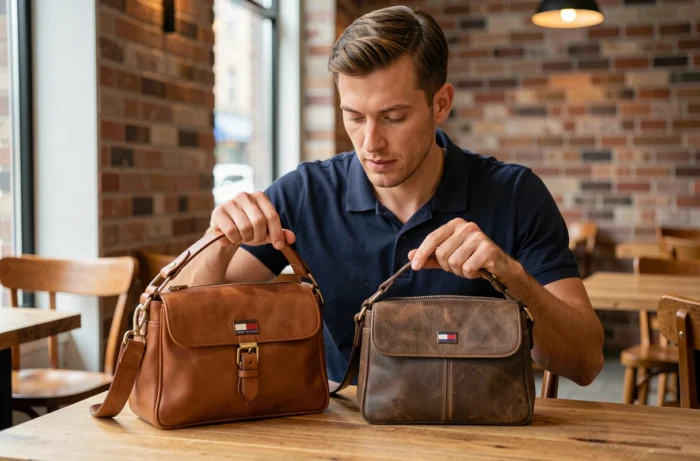
Some buyers rely on a QR code or a digital identifier printed on the label to validate a purchase. This approach has documented flaws. A printed QR code can be copied and pasted onto a fake bag, making scanning alone insufficient as proof of authenticity.
A unique identifier associated with an item is only valuable if the history of its scans and traceability are consistent. For example, the same code scanned from several different countries within a few days indicates a problem. However, most buyers do not have access to this advanced traceability data.
Authentication technologies are evolving (integrated NFC chips, blockchain for traceability), but their deployment across all Tommy Hilfiger ranges is not comprehensively documented. Relying solely on a digital device without physically examining the bag remains a risky strategy.
Resale platforms and authenticity guarantees: what truly protects the buyer
Not all online sales platforms offer the same level of protection. The difference lies in a specific point: who physically handles the bag and guarantees authenticity in writing.
- Peer-to-peer marketplaces that do not handle the item and do not promise any authentication leave the buyer alone in facing the risk. Recourse in case of a fake often limits itself to mediation without a guarantee of refund.
- Platforms that receive the bag, inspect it physically, authenticate it, and provide a written guarantee offer a significantly higher level of protection. The conditions for refunds and coverage of return shipping costs are generally outlined there.
- Before any purchase, verifying the identity of the party guaranteeing authenticity, and not just the seller’s rating, helps assess the actual level of risk.
The reputation of an individual seller (number of positive reviews, account age) provides an indication, but does not replace a physical inspection by a competent third party.
Digital Services Act and obligations of European marketplaces
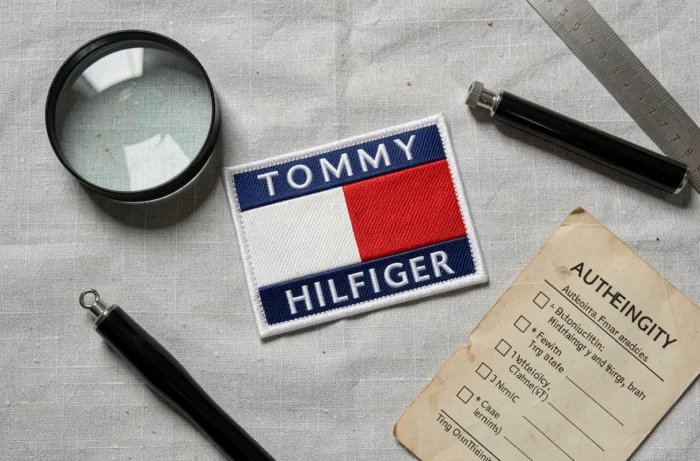
The European regulatory framework has evolved with the gradual implementation of the Digital Services Act. Article 30 of the regulation requires marketplaces to collect identification and payment information from professional sellers. Article 32 provides for consumer information when an illegal product is detected.
These obligations enhance seller traceability but do not constitute a guarantee of product authenticity. The marketplace must document who is selling, not certify what is being sold. The distinction is significant for the buyer.
Field returns vary on the actual effectiveness of these measures. Some platforms apply these requirements strictly, while others limit themselves to the legal minimum. Therefore, the informed buyer checks not only the displayed compliance of the platform but also its concrete practices for controlling sellers.
Verifications to conduct before finalizing an online purchase
- Request detailed photos of the bag from all angles, including interior stitching, hardware, and labels, rather than just one photo of the logo.
- Compare these photos with visuals of the same model on the official Tommy Hilfiger site or in an authorized store, paying attention to the proportions of the logo and the arrangement of elements.
- Check if the platform offers a guarantee of authenticity with full refund in case of proven fakes, and read the terms before purchasing.
- Prefer sales channels where the bag is physically inspected by an independent authentication service.
The price remains a signal, but an imperfect one. An abnormally low price for a recent model should raise questions. Conversely, a price close to new does not guarantee authenticity, as some fakes are sold at deliberately high prices to appear credible. Cross-referencing the price, the sales channel, and the physical examination of the bag remains the most reliable combination to secure a Tommy Hilfiger purchase.