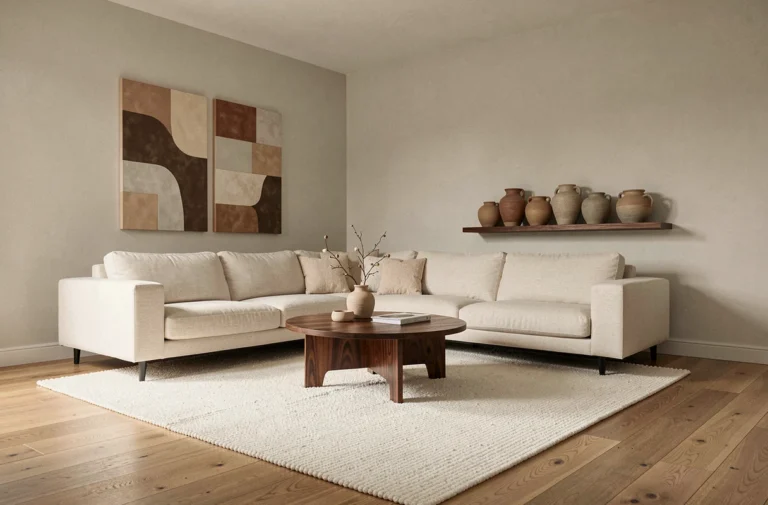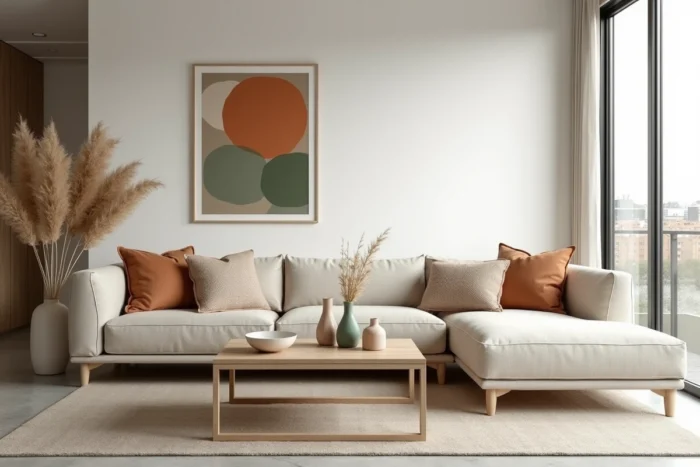
Interior decoration in 2026 is structured around a reversal of palette and materials. Pantone’s choice for its color of the year, Cloud Dancer (PANTONE 11-4201), a bright off-white, is a rare occurrence: it is the first time since the award’s inception in 1999 that a shade of white has been selected. This signal directs palettes towards neutral and soft backgrounds, designed to accommodate deeper color accents and bold textures.
Brass, brown wood, and velvet: the material vocabulary replacing chrome
The Apartment Therapy State of Home Design 2026 survey, conducted among 140 American designers, provides clear data. 79% of designers prefer brass over chrome for metallic finishes. And 76% favor brown wood over blonde wood in furnishings.
This shift reflects a movement dubbed quiet luxury in decoration. The principle is based on noble materials (brushed brass, deep velvet, dark wood) combined with understated lines. The desired effect is a meticulously detailed interior, without ostentation.
In practical terms, this translates to replacing chrome handles with satin brass, using walnut tabletops instead of bleached oak, and incorporating upholstery textiles in muted tones. This trend is also observed in the news on Angie Sweet Home, where recent inspirations confirm this direction towards warm and discreet palettes.
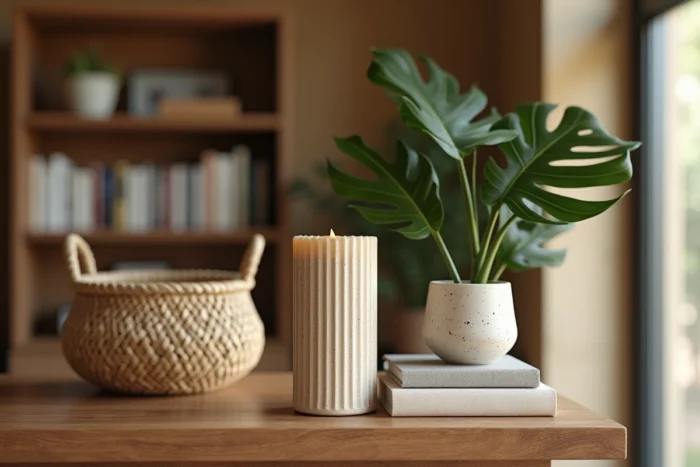
Cloud Dancer as a base: building a color palette for decoration 2026
An off-white as the color of the year does not imply a return to a total white look. Cloud Dancer serves as a backdrop. Its slightly creamy tone absorbs natural light better than pure white, reducing harsh contrasts in a north-facing room.
The palette logic involves applying this off-white to walls and large volumes (sofa, curtains), then introducing accent colors through accent furniture and accessories. The shades that work with Cloud Dancer include:
- Deep blues (navy, teal) on an armchair or cushions, to create a focal point without overwhelming the living room
- Terracotta and clay accents (vases, ceramic lamps), which warm the overall look without making it dark
- Sage or olive greens in wall textiles or throws, which extend the connection to natural materials without falling into caricatured biophilic design
A common mistake is to multiply accent colors. Two deep shades are enough to structure a space around a neutral background. Beyond that, visual coherence dilutes.
Dark wood furniture: how to integrate the trend into an existing living room
Switching from blonde wood to brown wood does not require replacing all the furniture. The most effective change focuses on pieces with a strong visual impact: coffee table, TV unit, open shelf. These elements occupy the main line of sight in a living room.
Walnut and smoked oak are the most commonly used woods in this trend. Their visible grain maintains a natural appearance, unlike uniform dark veneers that give an artificial look.
A technical pitfall concerns the combination of dark wood and poorly lit spaces. In an area that receives little natural light, furniture made entirely of brown wood can weigh down the atmosphere. The solution is to limit dark wood to low furniture (tables, consoles) and to keep high shelves in light tones or brass metal, which maintains brightness in the upper half of the room.
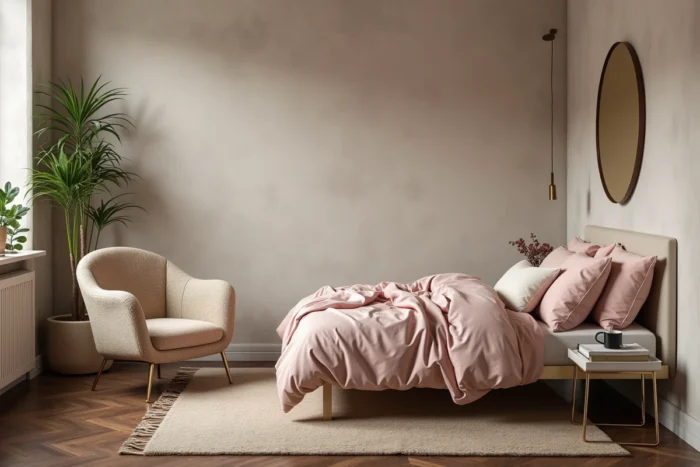
Combining brown wood and brass without overloading
Brushed brass acts as a visual binder between dark woods and light textiles. Handles, lamp bases, and brass frames create continuity without turning the space into a showroom.
The practical rule: brass should remain in small formats. A light fixture, furniture handles, a framed mirror. Once a brass surface exceeds the size of an accent table top, the effect shifts towards ostentatious decor, contradicting the principle of quiet luxury.
Textures and recycled materials: what the 2026 decor trend really changes
Recycled materials are increasingly prominent in furniture and coverings. The novelty of 2026 lies not so much in their presence but in their finish. Manufacturers offer textured surfaces that embrace their recycled origin instead of concealing it: regenerated concrete with visible aggregates, fabrics made from recovered fibers with intentional irregular grain.
The recycled material becomes an aesthetic choice, not just an ethical one. Reclaimed wood wall panels, for example, are now selected for the diversity of their patinas rather than for their uniformity.
This approach aligns with the trend of raw and imperfect finishes. Lime plasters, artisanal ceramics with color variations, and aged metals participate in the same register: showing the material rather than smoothing it out.
- Textured wall finishes (lime, tadelakt, stucco) replace uniform matte paints in living spaces
- Crumpled linen or recycled cotton textiles add depth to seating and curtains
- Handcrafted tiles with color variations between each piece create a lively floor, suitable for kitchens and bathrooms
The choice of Cloud Dancer as the color of the year makes perfect sense in this context. A uniform off-white background highlights the irregularities of raw materials, where a colored wall would visually compete with them. The interior decoration trend for 2026 can be summarized as this combination: a sober framework, materials that speak, and controlled color accents. The furniture and finishes carry the character of the room, not the wall paint.