A cushion bought on sale, a scented candle, a vase spotted on social media. The accumulation eventually leads to a cluttered interior, lacking a guiding thread. Decorating your home all year round without succumbing to every micro-trend requires a simple method: establish a solid foundation, then only rotate the bare minimum with the seasons.
Building a sustainable decor base before considering trends
Have you noticed that some interiors remain elegant regardless of the season? The common factor is rarely an unlimited budget. It’s more about a base of stable furniture and colors that doesn’t depend on any fleeting fashion.
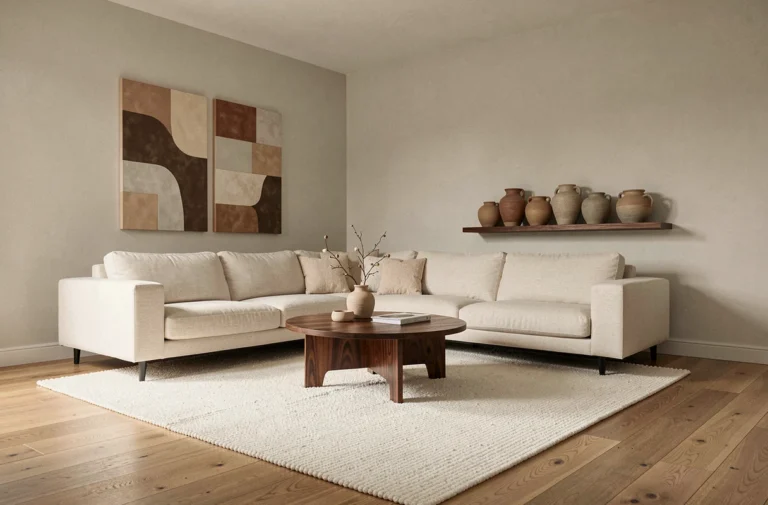
Specifically, the base rests on three categories. Large furniture (sofa, table, sideboard) benefits from being chosen in neutral shades or raw materials like solid wood, thick linen, or terracotta. These pieces remain coherent for years.
The walls follow the same logic. Warm and enveloping palettes, browns, ochres, terracotta, are gradually replacing cold whites in recent recommendations. A wall painted in light ochre doesn’t tire after six months, unlike a highly saturated color chosen under the influence of a viral trend.
The last pillar of the base: light. Rather than multiplying decorative light fixtures, distributing a few variable-intensity sources in each room allows you to modify the atmosphere of a living room without buying anything. Ideas are regularly shared on Bozar’s home page, which combines decoration with practical daily choices.
Minimal seasonal rotation: change little to change well
Layered seasonal decor is gaining ground in recent practical advice. The principle is straightforward: keep the permanent base and only rotate textiles and small objects.
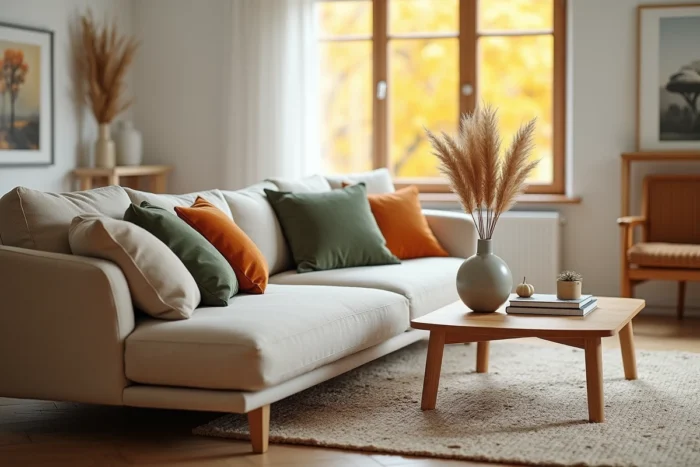
Why this choice? Because a wool throw placed on a linen sofa transforms a summer living room into a winter one in seconds. A lightweight cotton table runner replaced by a dark linen version produces the same effect in a dining room.
Here are the elements that deserve to be renewed throughout the year:
- Cushions and cushion covers, favoring two sets of complementary colors (light tones for spring-summer, warm tones for autumn-winter)
- Candles, diffusers, or fresh plants, which change the perception of a space without touching the furniture
- Small table or shelf objects (vase, frame, basket), limited to three or four interchangeable pieces per room
The rest remains unchanged. Three to four accessories per season are enough to refresh an interior. Beyond that, you fall back into accumulation.
Slow decor and sustainable materials: decorate less but better
The slow decor movement is asserting itself as a distinct trend in 2025-2026. Its logic is based on pieces chosen to last, not to be replaced with the next collection.
In practice, this means preferring solid wood furniture, even second-hand, over new melamine panel furniture. Wood, rattan, hemp, or woven linen have a double advantage: they bring warmth to a space while standing the test of time.
The functional angle also takes up space in decoration choices. Multifunctional furniture (bench-storage, extendable table, modular shelf) reduces the number of pieces needed in a room. Fewer objects in a space means more circulation, more natural light, and less visual clutter.
Choosing low-emission or certified materials complements this approach. A piece of furniture that does not emit volatile compounds after purchase also protects indoor air quality, an aspect often overlooked in classic decor advice.
Adapting each room without uniformity
A common trap is to apply the same style in every room of the house. The living room, bedroom, and kitchen have different usage constraints. Adapting the decor room by room avoids the “showroom” effect where everything looks the same.
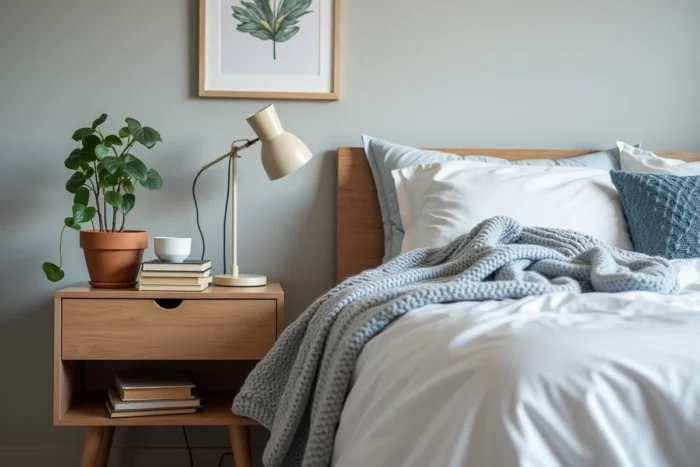
The living room can handle deep colors and varied textures because we spend awake time there, often under artificial light in the evening. A dark accent wall (forest green, chocolate brown) works better there than in a bedroom, where softer tones promote rest.
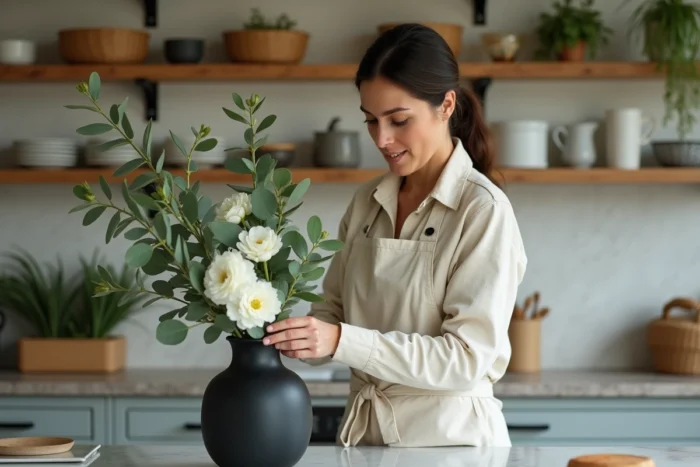
The kitchen gains personality with open storage limited to a few shelves, where useful items (jars, boards, ceramics) are displayed. The rest disappears behind closed doors. This sorting between the visible and the hidden does more for a kitchen’s elegance than any decorative accessory.
For passage rooms (entryway, hallway), a well-placed mirror and a light point are sufficient. Overloading a narrow space visually makes it appear smaller.
Consistent color palette: the guiding thread of a successful interior
Rather than randomly choosing a color for each room, working with a limited palette gives immediate coherence to the entire house. Three main shades and two accents are enough to cover all the rooms.
Earthy tones (terracotta, sand, brown) form a base that easily combines with natural greens or muted blues as accents. This approach allows for smooth transitions from one room to another without abrupt breaks, while letting each space assert its character.
A simple test before buying a new object: mentally place it in the room and check that it matches at least two existing elements. If it doesn’t, the object will likely end up in a closet.
Decorating all year round means making fewer choices, but making them with more rigor. A stable base, light textile rotation, materials that endure over time, and a coherent palette produce an interior that doesn’t go out of style between seasons.